- Home
- Trade News
- South Africa Exports Continue ...


At first glance, the story of South Africa’s exports in 2025 looks encouraging: the country’s total exports are on the rise, fuelled by buoyant global demand for precious stones, iron, and vehicles. Yet behind the upbeat headlines lies a more complicated reality.
While shipments abroad have increased, questions linger about sustainability, infrastructure, and whether this surge will truly bolster the nation’s fragile GDP. Much like its uneven railway system, South Africa’s trade picture runs on two tracks: one of opportunity, the other of constraint.
What Are the Major Export Categories for South Africa?
South Africa’s trade performance in 2025 reflects a mix of opportunity and structural weakness. South Africa exports a diverse basket of goods, but its reliance on raw commodities remains evident.
In early 2025, the value of South Africa’s exports rose because of its stronger performance in mining, manufacturing, and agriculture. Mining exports grew on the back of precious stones and minerals, even though platinum group metals (PGMs) and some base metals dropped.
Manufacturing gains came mainly from vehicles, machinery, and food products, which outweighed weaker sales of paper, plastics, and resins. Agriculture also did well, with fruit exports, especially grapes, supporting growth for the third quarter in a row.
On the imports side, South Africa bought more manufactured goods such as machinery, chemicals, and vehicles, while mining and agricultural imports declined. Reduced purchases of iron and steel, copper wire, and some precious stones led to the drop.
What Mineral Products Does South Africa Export Most?
The most significant mineral shipments from South Africa are gold, platinum, coal, and iron ore. These exports account for the republic’s GDP contribution from trade.
The mining sector continues to be the backbone of South African exports, but it is also a double-edged sword. When global commodity prices rise, export earnings surge. Yet when prices fall, so too does the stability of total exports.
What Base Metals Are Exported by South Africa?
Beyond precious minerals, metals such as steel, aluminium, and manganese form a vital part of the export basket. These base metals are critical for construction, railway networks, and industrial production in overseas markets.
South Africa’s exports of base metals are critical to India and China, which rely on them for rapid urbanisation projects. However, oversupply in global steel markets could place downward pressure on prices later this year, showing again how dependent the country is on volatile cycles.
How Important Are Vehicles and Machinery in South Africa Exports?
Vehicles and machinery represent South Africa’s strongest manufactured goods exports. Cars produced in Durban and Port Elizabeth are shipped to Germany, the United States, and the UK, making automotive shipments one of the country’s few globally competitive industrial strengths.
Alongside cars, South Africa exports industrial boilers, nuclear reactors, and parts for assembly lines abroad. This sector has seen significant investment growth, but it faces challenges, including new emissions regulations in Europe and higher shipping costs due to congested ports.
What Agricultural Products Does South Africa Export?
Agriculture remains a bright spot, with citrus fruit, wine, and nuts dominating exports. In June, however, citrus shipments to Europe were halted early due to stricter phytosanitary rules, highlighting the fragile balance between market access and compliance.
Farmers are now eyeing new agreement opportunities in cannabis cultivation, which could add billions in export revenues if properly regulated. Regional demand within Africa, particularly in Mozambique, is also creating fresh channels for agricultural goods.
What Chemicals and Manufactured Goods Are Exported?
Chemical exports are a smaller but growing section of South Africa’s trade. Fertilisers, plastics, and refined petroleum goods are shipped mainly within the African continent.
Manufactured exports also include industrial services, spare parts, and consumer-ready products. These categories, though smaller in scale compared to mining or vehicles, are crucial for diversifying away from overdependence on metals and raw commodities.
Why Are South Africa Exports Increasing in 2025?
South Africa’s export performance in 2025 has surprised many analysts. Despite domestic headwinds, global demand for key commodities has surged, lifting the country’s trade figures. The question, though, is what exactly is driving this growth, and whether it is as sustainable as it looks.
How Has the Value of Exports Increased This Year?
The value of South Africa’s exports has increased steadily in 2025, driven by stronger global demand and higher commodity prices. The month-on-month exports from June to July increased by a strong 8.5%, with further growth in August, according to official data.
What Role Do Global Commodity Prices Play in South Africa Exports?
Global commodity prices play a central role in the rise of exports. In 2025, stronger demand for precious stones and steel has boosted the republic’s export earnings, even without dramatic growth in volumes.
What Reservations Exist About the Export Growth?
Behind the promising numbers lie several cracks in the foundation. Export growth may look impressive, but challenges such as weak infrastructure, shifting trade policies, and uneven economic benefits raise concerns about how solid this momentum really is.
How Does US Trade Policy Uncertainty Affect South Africa Exports?
Uncertainty in US trade policy threatens South Africa’s exports, especially for steel, aluminium, and vehicles. New tariffs introduced earlier this year disrupted market access and forced exporters to seek alternative buyers. For South Africa, this is more than a short-term setback. It highlights how dependent the country remains on external governments’ decisions.
Why Does Poor Infrastructure Limit Export Potential?
Poor infrastructure limits export potential by increasing costs and causing delays. Congestion at ports and outdated railway systems mean that shipments of goods take longer and cost more to move.
While governments have promised upgrades, progress has been slow. This is South Africa’s Achilles’ heel: without investment in transport and logistics, even booming commodity demand cannot translate into sustained growth in total exports.
What Is the Impact of South Africa’s Trade Imbalance With China?
The trade imbalance with China remains one of South Africa’s most significant vulnerabilities. While China buys large volumes of iron, platinum, and coal, imports from Beijing, including electronics and machinery, far outweigh total exports.
How Does the Chrome Export Tax Affect Mining Exports?
The chrome export tax, introduced to protect local smelters, has complicated mining exports. While the aim was to create more domestic investment, producers argue that it has reduced competitiveness and slowed shipments.
The Minerals Council of South Africa has warned that the government’s plan to tax chrome ore exports could hurt miners’ profits and lead to job losses.
South Africa is the world’s biggest chrome exporter, a key ingredient in making stainless steel. It once led in producing ferrochrome (a mix of chrome and iron), but high electricity costs forced many smelters to shut down, allowing China to take the lead.
To revive the industry, the government announced in June 2024 that it would cut electricity tariffs for smelters and introduce the new export tax. However, mining companies argue the tax will not save the sector or protect jobs, but instead damage producers and reduce chrome’s contribution to the economy.
The industry employs about 25,000 people and was expected to earn 85 billion rand (US$4.85 billion) in export revenue by 2024. Last year, South Africa shipped a record 20.5 million tons of chrome concentrate, mainly to China, the world’s largest buyer. Major companies involved include South32, Tharisa Plc, and Glencore.
This tug-of-war reflects the difficulty of industrial policy. On paper, the tax could foster downstream industries. In practice, it risks driving buyers to other countries, leaving South Africa with weaker exports and fewer jobs.
Why Is Export Growth Detached From Domestic Economic Growth?
Export growth is detached from domestic GDP growth because the benefits of rising shipments rarely filter down into local services or household income. In 2025, unemployment remains high despite record exports.
This detachment is not new. For years, the South African economy has leaned on external demand rather than broadening domestic industrialisation.
Who Are the Main Export Partners of South Africa?
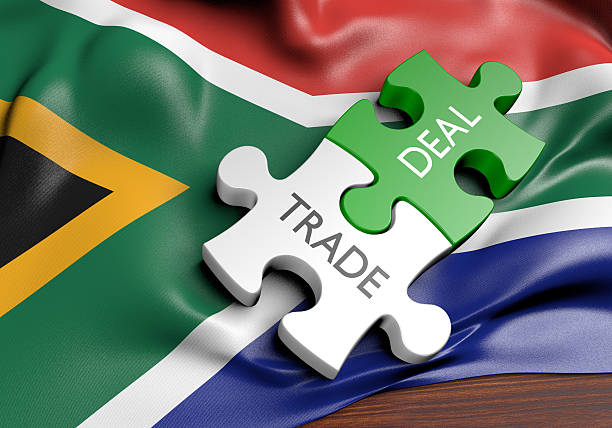
South Africa’s exports are not spread evenly across the world but are concentrated in a handful of powerful markets. Understanding who these partners are and why they matter sheds light on both the opportunities and risks shaping the Republic’s trade outlook.
Why Is China the Largest Buyer of South African Goods?
China is the largest buyer of South African goods because its industrial growth relies on steady supplies of iron, coal, and precious stones. In 2025, almost a third of South Africa’s total exports are bound for Chinese markets.
At the South Africa–China Investment Forum in Beijing, Deputy President Paul Mashatile highlighted that South Africa’s trade gap with China has widened sharply, from under US$1 billion a year in the 1990s to almost US$10 billion in 2023.
He noted that barriers such as tariffs, long distances, and tough competition make it harder for South African goods to enter the Chinese market. To close the gap, the country needs to diversify its export portfolio, focus on higher-value exports, and build a fairer trading relationship with China.
Experts agreed that China is an essential alternative market, but warned that it cannot simply replace the US. They pointed out risks such as complicated trade rules, possible knock-on effects on US investment, and the danger of relying too heavily on Beijing.
How Important Is the United States for South Africa Exports?
The United States remains an important partner, particularly for vehicles, metals, and precious stones. Tariff disputes earlier this year highlighted how fragile this link can be.
What Does Germany Import From South Africa?
The automotive supply chain between the two countries is deeply integrated, with German car manufacturers such as Volkswagen having production facilities in South Africa. Apart from the output of these factories, Germany also imports automotive parts and industrial goods.
FAQs
South Africa’s export story in 2025 raises plenty of practical questions, from the value of total shipments to the specific products driving growth. Here, we address some of the most common queries to provide a clearer picture of the country’s trade position.
1. What Is the Most Recent Value of South Africa’s Total Exports?
In July 2025, South Africa’s total exports reached R184.3 billion, according to preliminary figures. This marked a 3.1% increase compared to R178.7 billion in July 2024, showing steady year-on-year growth. The rise was mainly supported by strong shipments of citrus fruit, unwrought aluminium, and manganese ores and concentrates.
2. Which Products Dominate South Africa’s Exports?
The products that dominate South Africa’s exports are precious metals (gold, platinum, and diamonds), mineral products (coal and iron ore), and vehicles. Combined, these categories regularly make up well over half of the country’s total exports, underscoring how dependent the economy is on just a few sectors.
3. When Did South Africa’s Exports Increase the Most This Year?
South Africa’s exports experienced their most significant growth later in the year. The month-on-month exports from June to July increased by a strong 8.5%, far outpacing the modest growth of 1.0% seen in the first quarter of the year.
Conclusion: A Trade Story Still in Draft
South Africa’s exports are climbing in 2025, aided by firm commodity prices and strong demand from China, India, and Germany. Yet challenges remain: weak infrastructure, policy uncertainty, and trade imbalances limit the upside. For the Republic, sustained progress will depend on balancing exports with domestic reform, ensuring growth does not end up as a one-sided story.
But as encouraging as this rise may be, we cannot ignore the parallel increase in total imports, from oil to machinery, showing that South Africa’s trade picture is still far from balanced. It is worth taking the time to explore the details behind these numbers, because the bigger story often lies in the fine print.
At TradeDataPro, we believe that understanding these dynamics is essential for businesses, investors, and policymakers. For a deeper analysis of South Africa’s global export trends, visit our official website for more in-depth reports and editorial articles. Keep this page bookmarked, as the story is constantly being updated, and the global landscape can shift faster than expected.